
The standard hamstrings-below-parallel squat is often hailed as the king of lower body exercises, and stands as a cornerstone in strength and hypertrophy training… so why would anyone ever do a quarter squat, or even a half squat? Less range of motion = less gains, right?
Wrong. Partial squats are rapidly growing in popularity, and for good reason. They offer benefits that can’t quite be reaped just by performing the vanilla full range of motion squat.
In this article we’ll be comparing partial and full squats, uncovering the unique benefits of each, and, most importantly, figuring out which depth is best for you.
As with any exercise, it’s essential to first ensure proper form and technique to maximize effectiveness and minimize the risk of injury. If you’re new to squats or haven’t mastered your form yet, read this.
Determining the ideal squat depth for you isn’t a one-size-fits-all scenario. It hinges on various factors such as goals, training experience, and injury history.
What’s the Difference?
Let’s start by defining the two key squat depth types:
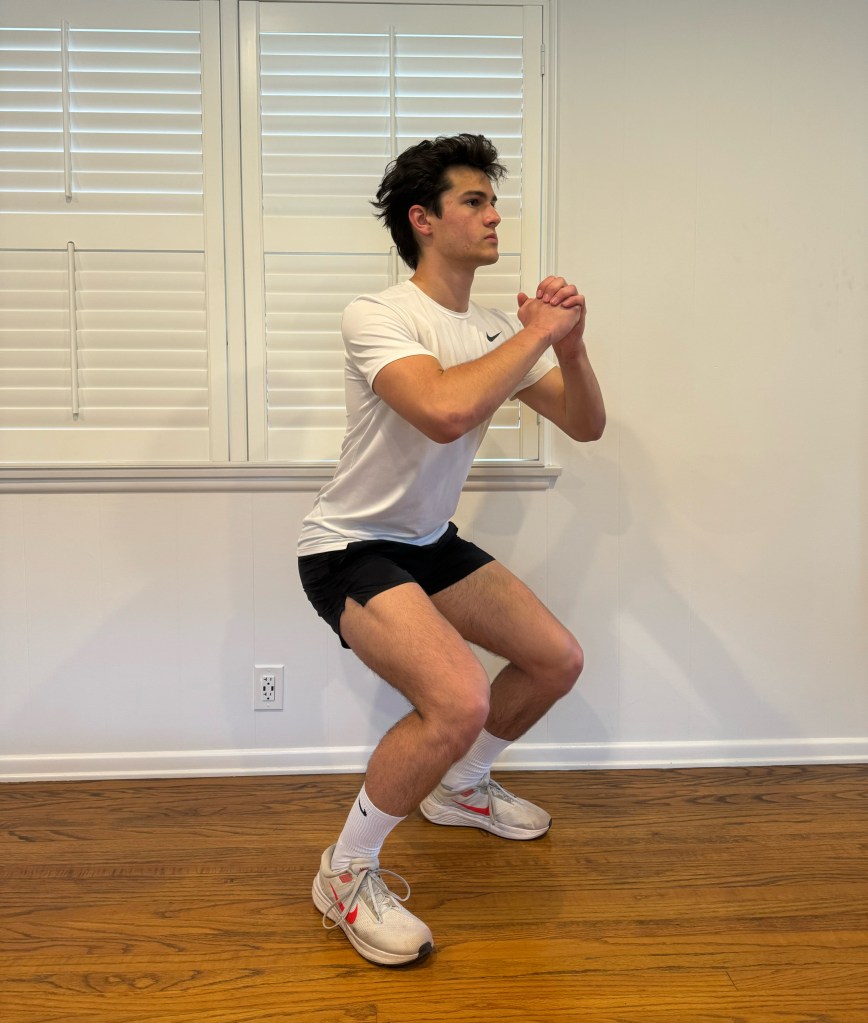
The Partial Squat
When performing a partial squat, the lifter doesn’t lower their body to the point where their thighs are parallel to the ground or lower. At the deepest point in the squat, The knees are usually flexed at any angle greater than or equal to 90 degrees. During a partial squat, the hips usually don’t drop below the knee, and the knees usually don’t travel past the toes unless the heels are lifted.

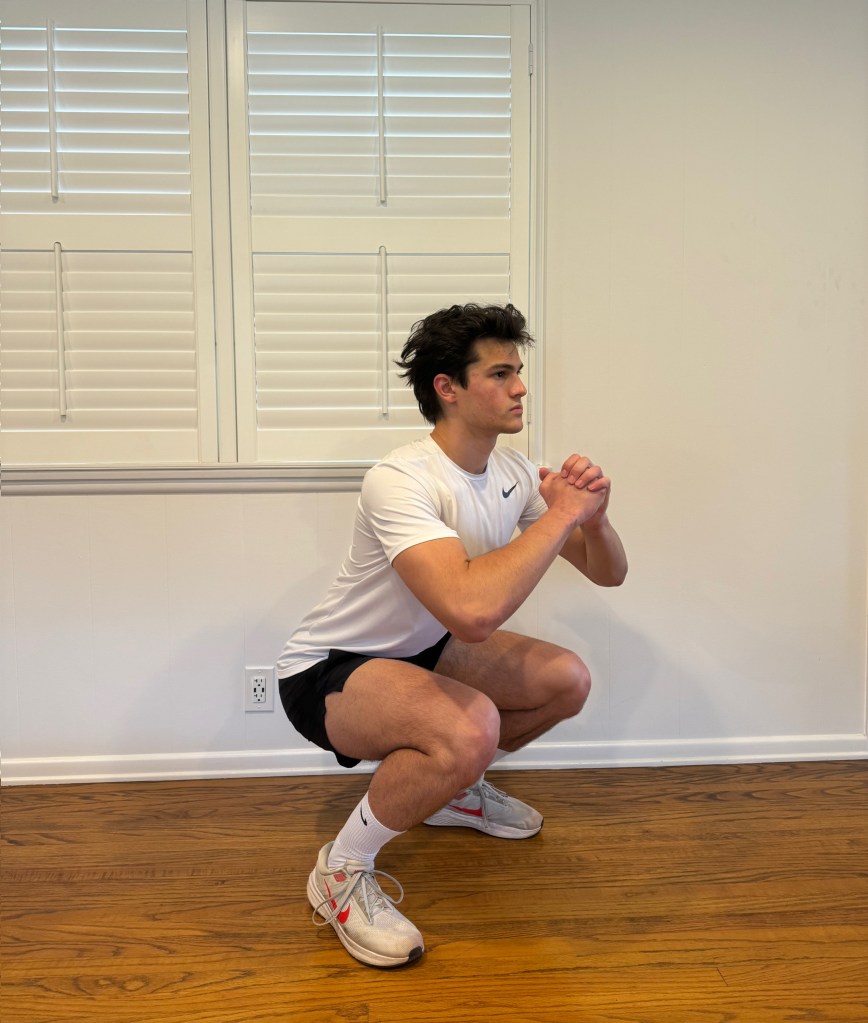
The Full Squat
When performing a full squat, the lifter brings their thighs past the parallel position and the hamstrings closer to the calves. At the deepest point in the squat, The knees are flexed at an angle less than 90 degrees. During a full squat, the hips usually drop below the knee, and the knees usually travel past the toes of the lifter.
Comparing the Two
To figure out which squat depth is best for you, we’ll be comparing them based on three criteria:
- Muscle activation
- Effect on hypertrophy (muscle volume)
- Effect on athletic performance
1. Muscle activation
Muscle activation in partial and full squats are nearly equal. But according to the Journal of Strength and Conditioning Research (2017), muscle activation is generally higher in the partial back squat for the vastus lateralis (outermost quad muscle), vastus medialis (innermost quad muscle), gluteus maximus (butt muscle), biceps femoris (outer hamstring muscle), soleus (calf muscle below the gastrocnemius that aids in ankle movement), and erector spinae (muscles along your spine that help you stand and bend).
The only muscles tested in the study that showed higher activation in full squats compared to partial squats were the rectus femoris (middle quad muscle) and the semitendinosus (inner hamstring muscle).

2. Hypertrophy (Muscle Volume)
Studies, such as this one, have shown that the full squat is in fact superior for maximizing muscle hypertrophy. This is due to the full squat’s use of full range of motion (ROM) and the partial squat’s lack of it. Going through the full ROM engages the muscle fibers much more comprehensively, stimulating a broader spectrum of motor units compared to partial ROM. Partial ROM exercises may limit muscle activation to specific segments of the movement, neglecting certain muscle fibers, leading to less overall hypertrophic development.
in the study, the volumes of the rectus femoris and hamstring muscles did not change in either the full squat training group or the half squat training group. However, the volumes of the adductor (inner thigh muscles that bring the legs together) and gluteus maximus muscles significantly increased in the full squat training group compared to the half squat training group.
3. Athletic Performance
Both partial and full squats have proven to be excellent for developing athletic abilities such as power and speed, but it is argued that partial squats are superior for developing athletic performance due to specific biomechanical and neuromuscular adaptations which contribute to sports and athletic movements more than full squats do.
Partial squats allow athletes to lift heavier loads compared to full squats. This increased load can stimulate greater neuromuscular adaptations, enhancing muscle recruitment and force production. This is crucial for explosive movements, such as jumping and sprinting, where maximal force production is essential.
Moreover, Partial squats target specific joint angles relevant to many athletic activities. Training within these angles helps strengthen muscles and connective tissues in positions commonly encountered during sports, leading to improved performance in those specific ranges. Sport-specific angles also may contribute to developing the stretch-shortening cycle, improving the ability of muscles to rapidly generate force during dynamic movements
Full squats, providing more comprehensive muscle activation, will better develop strength in the full range of motion. They can even contribute to enhanced joint flexibility and mobility, which are crucial for athletes to avoid injuries.
The findings of this study suggest that training in both the partial and full ROM may be effective for improving one’s maximal strength and force-time curve.
Which is Right for You?
If you’re mainly looking for increased muscle volume and overall hypertrophic development, full squats with their broader muscle activation are probably your best bet.
If you’re an athlete, you should include both full and partial squats in your training routine. Full squats bring overall muscle activation, building strength, flexibility, and mobility, building a solid foundation for your diverse movements. Meanwhile, partial squats focus on specific joint angles and allow for heavier loads, building your explosiveness for actions like jumping and sprinting. By incorporating both, you ensure a well-rounded development, optimizing your power and mobility.
If you’re recovering from an injury or have limited range of motion, consult with a physical therapist before you do any type of squat or other strenuous exercise.
No matter who you are or what your goals are, always make sure to squat with safety and proper form.
 Well With Will
Leave a comment